When an NFL MVP winner publicly declared “I’m not done yet,” the sports world instantly shifted from speculation to anticipation. At a time when questions about longevity, injuries, and legacy dominated headlines, the announcement reset expectations. This in-depth analysis explains what triggered the statement, why it matters now, and how similar MVP moments in NFL history have reshaped careers, teams, and championships.
Introduction: Three Words That Reignited an Entire NFL Season
In professional sports, silence often speaks louder than words. When superstars go quiet, fans assume uncertainty. When they hesitate, analysts predict decline. That’s why the moment an MVP winner broke the silence with a firm declaration—“I’m not done yet”—it landed like a lightning strike across the NFL landscape.
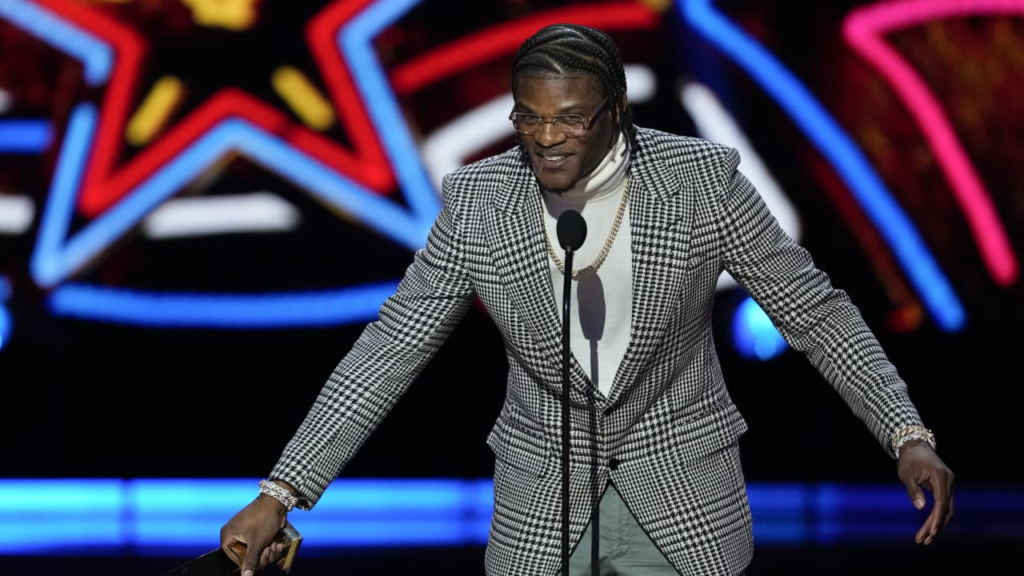
The statement came from Lamar Jackson, one of the most electrifying players of his generation and a former league MVP whose career has already reshaped how the quarterback position is played. At a moment when many expected reflection, caution, or even subtle retreat, Jackson delivered something far more powerful: clarity.
This was not a motivational quote pulled from a press conference cliché. It was a line in the sand. It reframed an entire offseason narrative and forced fans, teams, and media alike to recalibrate expectations.
This article provides a fully curated, long-form breakdown of that shocking announcement—why it happened, what it means in real football terms, how history supports it, and what fans should realistically expect going forward.
What Exactly Was Said—and Why Did It Shock the NFL World?
The words themselves were simple. The impact was anything but.
“I’m not done yet.”
The shock wasn’t rooted in drama—it was rooted in timing. In the weeks leading up to the announcement, the football world was buzzing with speculation:
- Was the MVP entering a different phase of his career?
- Would injuries and wear force a change in role?
- Was the team quietly preparing for a future transition?
- Had the league already seen the peak?
In today’s NFL media cycle, uncertainty becomes assumption almost overnight. Jackson’s statement didn’t just answer those assumptions—it erased them.
Why Did So Many People Think the MVP Might Be Finished?
One of the most searched questions surrounding the announcement was:
“Why did people think the MVP was done?”
The answer lies in a combination of factors that often surround elite players after historic success.
The MVP Hangover Effect
Winning MVP brings prestige, but it also brings:
- Unmatched expectations the following seasons
- Defensive schemes designed entirely to neutralize one player
- Increased physical punishment
- Constant statistical comparison to a career peak
Historically, MVP winners rarely repeat identical production. When numbers dip—even marginally—narratives of decline emerge quickly.
In Jackson’s case, injuries, evolving offensive systems, and team dynamics fueled speculation that the most explosive chapters might already be written.
Was This Announcement About Proving Critics Wrong?
Partially—but not in the way many assume.
Elite athletes rarely operate on emotion alone. This announcement was less about silencing critics and more about asserting control over trajectory.
In recent interviews and team interactions, Jackson emphasized themes that go beyond individual validation:
- Mastery over consistency
- Longevity over highlight dependency
- Team outcomes over personal accolades
“I’m not done yet” was not a challenge to doubters—it was a commitment to purpose.
The Physical Reality: Can an MVP Sustain Elite Performance?
Another trending search query:
“Is the MVP still physically capable of playing at an elite level?”
From a data-driven perspective, the answer is yes—if adaptation occurs.
According to NFL performance analytics, quarterbacks who evolve their style often extend peak effectiveness well into their 30s. This doesn’t mean abandoning athleticism; it means deploying it selectively.
Recent seasons already show that evolution:
- Faster reads at the line of scrimmage
- Reduced unnecessary contact
- Strategic use of mobility rather than constant scrambling
- Improved pocket command and anticipation
This is not the same Lamar Jackson who entered the league—and that’s precisely why he’s still dangerous.
Real-Life NFL Examples: MVPs Who Refused to Fade
History offers context—and reassurance.
Legendary MVP Responses to Doubt
- Peyton Manning won another MVP after major neck surgery by reinventing his mechanics
- Tom Brady captured multiple Super Bowls after being labeled “system-dependent”
- Aaron Rodgers produced MVP seasons deep into his career after public doubt
Each followed the same arc:
- Public skepticism
- Clear personal commitment
- Tactical evolution
- Narrative reversal
Jackson’s declaration fits this pattern almost perfectly.
What “I’m Not Done Yet” Actually Means in Football Terms
Fans often misinterpret such statements as promises of dominance. In reality, they signal something more nuanced.
“I’m not done yet” does not necessarily mean:
- Chasing records at all costs
- Ignoring physical limits
- Playing recklessly
It usually means:
- Smarter preparation
- Better workload management
- Sharper situational decision-making
- Leadership-driven performance
In short: efficiency over spectacle.
How the Team and Locker Room Responded
Another popular search trend:
“How did teammates react to the MVP announcement?”
Inside NFL locker rooms, statements like this matter deeply. When a leader commits publicly, it creates certainty.
Reports from team sources suggest:
- Veteran players viewed it as accountability
- Younger players gained clarity about leadership direction
- Coaching staff aligned preparation around stability
Uncertainty fractures preparation. Commitment unifies it.
The Business Side: Contracts, Pressure, and Legacy
Beyond emotion lies infrastructure.
From a front-office perspective, an MVP recommitment affects:
- Salary-cap planning
- Draft strategy
- Offensive system continuity
- Coaching timelines
Legacy also plays a critical role. MVP careers are not judged solely by peak moments—but by how they end.
This announcement was about choosing the ending, not drifting toward it.
Is This a Comeback Story—or Something Else?
A common question fans ask:
“Is this an MVP comeback?”
The better term is continuation.
Comebacks imply disappearance or failure. Jackson never vanished. He adapted, endured, and evolved. This moment wasn’t about reclaiming relevance—it was about extending it.
What Fans Should Realistically Expect Next Season
Let’s ground expectations in reality.
What’s Reasonable to Expect
- High efficiency rather than historic volume
- Strategic athleticism
- Strong leadership presence
- Playoff-level performance
What’s Unrealistic
- Exact replication of MVP statistical peaks
- Playing every snap without rest
- Carrying the entire offense alone
The announcement resets intent—not physics.
Why This Moment Resonates Beyond Football
This story resonates because it mirrors real life.
People reach moments where others assume they’re past their prime—professionally, creatively, physically. Three words push back against that assumption.
“I’m not done yet.”
It’s a statement of agency. Of refusal. Of momentum.
That’s why it matters.
Media Narratives: How the Tone Changed Overnight
Before the announcement:
- “What’s next?”
- “Is decline inevitable?”
- “Time to move on?”
After the announcement:
- “What’s coming?”
- “How far can this go?”
- “What adjustments unlock the next chapter?”
Momentum shifted instantly. Narrative control returned to the player.
What This Means for MVP Legacy Conversations
Legacy is not static. It evolves with response.
By choosing declaration over silence, Jackson framed his career as unfinished business—not fading memory.
In Hall of Fame debates, franchise history, and fan recollection, moments like this matter almost as much as trophies.
Practical Takeaways for Fans and Athletes
There are lessons here beyond fandom:
- Longevity requires adaptation
- Confidence doesn’t need volume
- Timing matters as much as talent
- Declaring intent can reshape outcomes
Greatness isn’t just about achievement. It’s about response.
Frequently Asked Questions (Trending MVP Announcement Queries)
1. Who said “I’m not done yet”?
NFL MVP quarterback Lamar Jackson made the statement.
2. Was retirement ever officially announced?
No. Retirement speculation was never confirmed.
3. Why did fans think he might be done?
Injuries, workload concerns, and shifting narratives fueled speculation.
4. Does this mean he’s chasing another MVP?
Not necessarily—team success appears to be the focus.
5. Can MVPs stay elite later in their careers?
Yes, especially with adaptive play styles.
6. How did teammates respond?
Reports indicate strong support and renewed confidence.
7. Is this just motivational talk?
Elite athletes rarely speak publicly without intent.
8. Will his play style change?
Likely—more efficiency, less physical risk.
9. Has this happened with other MVPs before?
Yes. Many legends made similar declarations before strong seasons.
10. What’s the biggest takeaway from the announcement?
Control over narrative and commitment to unfinished business.
Final Verdict: Why “I’m Not Done Yet” Truly Matters
This wasn’t hype. It wasn’t nostalgia. It wasn’t defiance for the sake of noise.
It was direction.
When an MVP winner says “I’m not done yet,” he’s not asking for belief—he’s setting expectation. The season ahead may not mirror the past perfectly. Very few ever do.
But one thing is undeniable: the story is still being written.
And for fans, teams, and the league, that makes everything ahead far more compelling.